

 by Mit Thakkar
Summarize this blog post with:


- Types of Software Testing for UK Startups and Enterprises
- What Is Software Testing?
- ❋ Definition of Software Testing
- ❋ Why Software Testing Matters
- Why UK Businesses Need Different Types of Software Testing
- 🢡 Rapid digital transformation
- 🢡 Rising cybersecurity threats
- 🢡 GDPR and compliance requirements
- 🢡 Customer expectations for flawless digital experiences
- 🢡 Faster software release cycles
- Testing Types Best Suited for Startups
- ❋ Unit Testing
- ❋ Integration Testing
- ❋ Smoke Testing
- ❋ Regression Testing
- ❋ Basic Security Testing
- ❋ Performance Testing
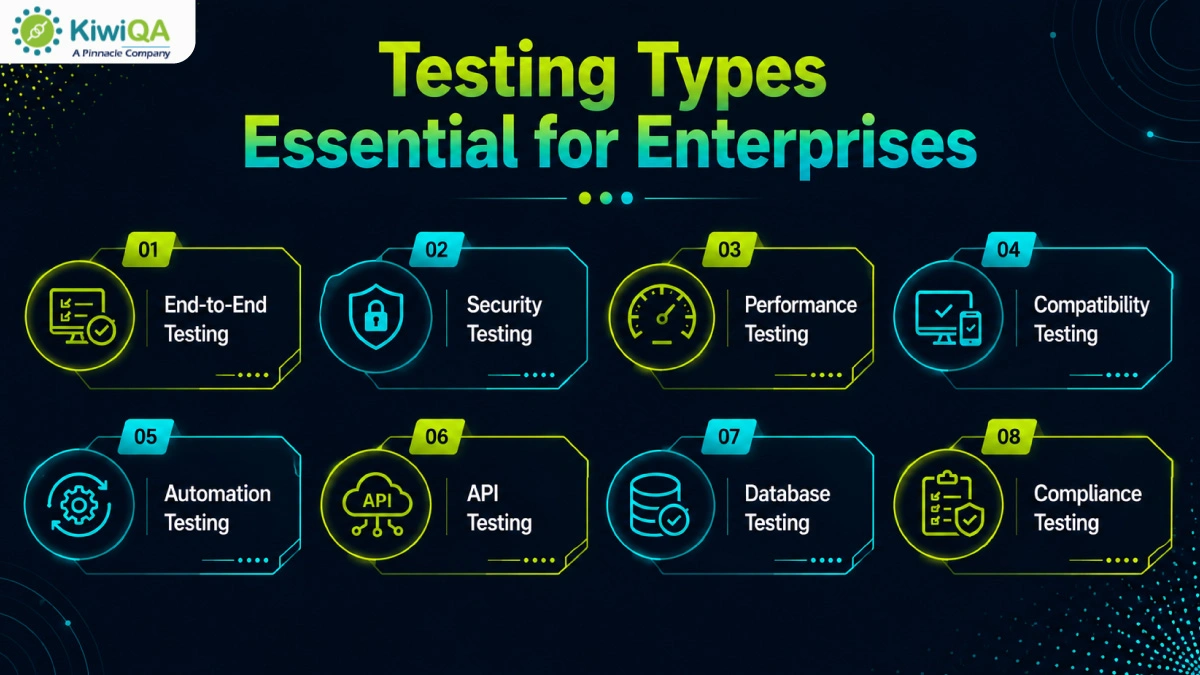
- Testing Types Essential for Enterprises
- 🢡 End-to-End Testing
- 🢡 Security Testing
- 🢡 Performance Testing
- 🢡 Compatibility Testing
- 🢡 Automation Testing
- 🢡 API Testing
- 🢡 Database Testing
- 🢡 Compliance Testing
- Industry-Specific Testing Requirements in the UK
- ❋ FinTech
- ❋ Healthcare
- ❋ Retail & eCommerce
- ❋ SaaS Companies
- How to Choose the Right Software Testing Strategy
- 🢡 Business goals
- 🢡 Project complexity
- 🢡 Budget
- 🢡 Timeline
- 🢡 Compliance requirements
- 🢡 Technology stack
- 🢡 Team expertise
- Benefits of Investing in Professional Software Testing
- ❋ Higher software quality
- ❋ Faster release cycles
- ❋ Improved customer satisfaction
- ❋ Reduced maintenance costs
- ❋ Enhanced security
- ❋ Better business reputation
- ❋ Increased ROI
- Choose the Right Software Testing Strategy for Your Business Growth
Types of Software Testing for UK Startups and Enterprises
Before releasing a product, a business spends lots of time writing code and addressing bugs. The next phase includes performing several tests on code to ensure it performs as intended. Well, before you perform testing, you must have knowledge of QA types. Software testing services are the process of tracking various elements of a product and ensuring it meets goals.
Software testing plays a critical role in helping UK startups and enterprises deliver reliable, secure, and high-performing digital products. According to the UK Government’s Cyber Security Breaches Survey, 43% of UK businesses reported identifying a cyber security breach or attack in the previous 12 months, highlighting the importance of thorough security and quality testing throughout the software development lifecycle.
What Is Software Testing?
❋ Definition of Software Testing
The process of assessing an application to find flaws and confirm that it satisfies requirements is known as software testing. A report said that the worldwide testing market is expected to reach $93.94 billion over the next 4 years. The main goal of different types of software testing is to guarantee that the software operates accurately, consistently, and provides a high-quality user experience. It consists of validation to make sure the software satisfies user and business needs and verification to ensure its performance.
❋ Why Software Testing Matters
A software testing company enhances the security & functionality of an app. It helps avoid expensive production flaws and guarantees a flawless user experience. By providing stable software and assisting companies in adhering to industry rules and data protection standards, it also improves customer trust. Ultimately, it lowers operational, financial, and reputational risks.
Why UK Businesses Need Different Types of Software Testing
🢡 Rapid digital transformation
Software test automation services assist companies in ensuring that applications continue to be reliable, secure, and scalable during rapid digital transformation and ongoing software innovation.
🢡 Rising cybersecurity threats
Security testing protects sensitive company data, customer information, and financial assets, and upholds confidence in digital applications. Software testing companies find vulnerabilities before attackers take advantage of them.
🢡 GDPR and compliance requirements
Compliance testing lowers legal risks, protects consumer data, and assists companies in passing regulatory audits by ensuring software complies with GDPR and industry regulations.
🢡 Customer expectations for flawless digital experiences
Consumers expect quick, error-free apps on all platforms. With each software release, thorough testing enhances usability, performance, and customer satisfaction.
🢡 Faster software release cycles
Regular updates are necessary for modern development. Faster releases, fewer defects, software quality maintenance, and effective Agile and DevOps workflows can be obtained through continuous testing.
Also Read: How Much Does Software Testing Cost in the UK for 2026?
Testing Types Best Suited for Startups
❋ Unit Testing
Before an application’s distinct components, features, or modules are included in the overall system, unit testing evaluates them. It lowers the expense and difficulty of resolving flaws later in development by assisting entrepreneurs in identifying coding bugs early. Developers may confidently add new features, enhance code quality, and speed up software releases while preserving application stability. It ensures every module operates as expected.
❋ Integration Testing
Integration testing by software testing companies guarantees proper communication between various modules, services, APIs, and third-party tools when they are integrated. This testing is crucial for eliminating functionality gaps because startups frequently rely on numerous cloud services and external interfaces. Early detection of integration issues enhances user experience, lowers deployment risks, and guarantees the seamless operation of the application when new features and services are added.
❋ Smoke Testing
After each new release, smoke testing is carried out to ensure that the main features of the application function as expected. It confirms that the product is reliable enough for additional testing rather than thoroughly testing every function. Smoke testing keeps unstable releases from reaching quality assurance teams or end users for startups that release updates often by quickly identifying major failures.
❋ Regression Testing
Regression testing makes sure that software updates, bug patches, and newly introduced features don’t adversely affect already-existing functionality. Even minor code modifications can cause unexpected issues because entrepreneurs are always improving their products. The software testing service provider preserves software reliability, safeguards vital business operations, and enables development teams to make changes more quickly. This testing lowers the possibility of hampering user experience.
❋ Basic Security Testing
Startups can find typical vulnerabilities like data exposure, unsafe APIs, insufficient authentication, and inadequate access controls by using basic security testing. Implementing basic security testing lowers the risk of cyberattacks and data breaches. Developing secure apps from the start also boosts customer confidence and helps with future compliance needs as the company grows.
❋ Performance Testing
Performance software testing types measure reaction times, stability, and resource consumption to assess how an application performs under various workloads. Startups should be aware of how their software functions during periods of high usage, even if they anticipate moderate traffic. Early performance testing ensures that the application is responsive, scalable, and ready to support future company expansion without unplanned downtime by identifying bottlenecks before they harm users.
Testing Types Essential for Enterprises
🢡 End-to-End Testing
By examining interactions across apps, databases, APIs, third-party platforms, and user interfaces, end-to-end testing verifies business workflows. Businesses usually run intricate ecosystems with many interconnected systems. By ensuring that every process runs smoothly from beginning to end, this testing lowers operational risks, enhances company continuity, and provides stakeholders with a flawless experience.
🢡 Security Testing
Vulnerabilities that might compromise sensitive company data, client information, and vital infrastructure are found through enterprise security testing. It contains evaluations for network security, encryption, authorization, authentication, and application vulnerabilities. In an increasingly complex digital environment, regular security testing helps businesses prevent cyber threats. It adheres to industry rules, lowers financial risks, and improves their overall cybersecurity landscape.
🢡 Performance Testing
Enterprise apps may manage thousands or even millions of users without experiencing performance issues thanks to performance testing. It measures response times, scalability, stability, and system behavior. Businesses may maximize application performance, ensure service availability, and provide consistent user experiences.
🢡 Compatibility Testing
Enterprise apps are tested for compatibility to ensure that they work consistently across various browsers, OS, devices, screen sizes, and hardware environments. Large organizations frequently utilize a variety of technologies to support various user groups. By ensuring that every user has a consistent experience across all platforms, this testing lowers customer complaints. It helps to increase accessibility and minimizes support expenses related to environment-specific problems.
🢡 Automation Testing
Different software testing types, like automation testing, quickly run repeating test cases using scripts and testing frameworks. Automation increases testing efficiency, lowers manual labor, and speeds up release cycles. It offers major advantages for businesses with large applications and frequent software releases. Additionally, automated testing improves overall program quality, promotes CI/CD, and expands test coverage.
🢡 API Testing
Without depending on the user interface, API testing verifies interactions between apps, microservices, cloud platforms, and external systems. API testing guarantees accurate data interchange, scalable integrations, and consistent system performance because enterprise software is highly dependent on interconnected services. It supports scalable and secure business architectures and improves software stability by identifying problems early in the development process.
🢡 Database Testing
Database testing checks the security, consistency, accuracy, and integrity of data kept in business systems. To guarantee reliable operations, it examines database structures, data migrations, indexing, and transaction processing. Database testing enables accurate reporting for operational and strategic decision-making. It eliminates data theft and enhances application performance for enterprises that deal with large datasets.
🢡 Compliance Testing
Compliance testing guarantees that corporate applications adhere to internal governance guidelines, industry standards, and legal requirements. Businesses in industries like healthcare, banking, insurance, and government must follow practices for data security, privacy, and accessibility. Frequent compliance testing reduces legal risks, safeguards private data, and facilitates successful audits. It fosters confidence among partners, clients, and regulatory bodies.
Industry-Specific Testing Requirements in the UK
❋ FinTech
Maintaining security, regulatory compliance, and application performance are the major goals of software testing in the UK FinTech industry. The financial platforms handle sensitive client information and transactions; that’s why security testing is crucial for finding weaknesses. Performance testing verifies that banking and payment applications continue to be responsive and reliable despite high transaction volumes. It guarantees a safe and seamless client experience. Compliance testing guarantees adherence to FCA rules, GDPR, and payment standards.
❋ Healthcare
Patient data security, application reliability, and regulatory compliance are given top priority in healthcare software testing. Strict security testing is required to protect private patient data in systems including hospital administration software, telemedicine platforms, and EHR. Compliance testing confirms adherence to GDPR, NHS standards, and other healthcare rules. Reliability testing guarantees the continued availability of essential healthcare services. Thorough testing enables healthcare companies to provide digital healthcare solutions that are reliable, accurate, and safe.
❋ Retail & eCommerce
Testing is necessary for retail and eCommerce companies to guarantee that websites and applications function consistently in high customer traffic. While payment testing confirms safe and correct transaction processing across several payment gateways, load testing assesses system stability during seasonal sales and promotional events. A consistent purchasing experience across various browsers, OS, and devices is ensured via cross-browser testing. Retailers can maximize online sales potential, reduce downtime, and enhance customer happiness by implementing these testing procedures.
❋ SaaS Companies
To support cloud-based, multi-user environments, SaaS companies need specialized testing. When multiple organizations use the same application, multi-tenant testing makes sure that customer data stays secure and isolated. API testing validates integrations with internal systems and third-party services. Scalability testing evaluates the platform’s ability to manage growing user numbers and workloads. When combined, these testing procedures enable SaaS providers to provide safe and effective applications.
How to Choose the Right Software Testing Strategy
🢡 Business goals
Your overall business goals, such as faster product launches, better customer service, increased security, or regulatory compliance, should be supported by the appropriate testing strategy. Setting clear objectives assists in resource allocation and testing activity prioritization. By collaborating with a professional software testing service provider, you can make sure that your testing strategy lowers risks. It produces measurable value throughout the SDLC and is in line with business objectives.
🢡 Project complexity
Every software project has different requirements depending on its functionality, user base, architecture, and integrations. While smaller applications might require a more targeted approach, complex enterprise applications frequently require extensive testing. In order to ensure that crucial features are validated without adding unnecessary testing effort or expenses, project complexity assessment helps in determining the proper combination of manual and automated testing.
🢡 Budget
The scope and complexity of software testing are significantly influenced by the budget. Although cutting testing expenses might seem beneficial at first, inadequate testing can result in costly production problems. By giving high-risk areas priority, utilizing automation when necessary, and allocating resources to testing tasks that provide the most business value. An organized plan strikes a balance between quality and cost.
🢡 Timeline
The choice of testing techniques and the testing strategy are influenced by project deadlines. In order to maintain quality without delaying deployment, strict release schedules might necessitate increased automation, ongoing testing, and risk-based prioritization. Teams can minimize last-minute problems, find defects earlier, and guarantee software is released on time without sacrificing reliability by planning testing activities early in the development lifecycle.
🢡 Compliance requirements
Strict regulatory requirements related to security, privacy, and data management must be met by sectors like government, healthcare, insurance, and finance. Early comprehension of compliance requirements helps in identifying the testing, documentation, and validation procedures that are required. Compliance testing lowers legal risks and facilitates successful audits. It guarantees that the application complies with all relevant industry regulations prior to deployment.
🢡 Technology stack
The testing tools, frameworks, and methodologies required depend on the required development solutions. Specialized testing techniques are frequently needed for applications that use cloud platforms, microservices, mobile technologies, or AI components. Teams can select compatible testing solutions, increase test coverage, and make sure every component operates consistently across various environments.
🢡 Team expertise
The effectiveness of a testing strategy is significantly impacted by the knowledge and expertise of your development and testing teams. More thorough testing can be carried out more effectively by teams with strong automation, security, performance, or domain expertise. Early detection of skill gaps enables organizations to hire outside experts or offer training. It guarantees the project benefits from the appropriate expertise, resources, and testing best practices.
Also Read : Top 11 Banking Software Testing Companies in the UK Trusted by Fintech Firms
Benefits of Investing in Professional Software Testing
❋ Higher software quality
Expert software testing finds flaws early on, guaranteeing that programs are stable and function as intended. Before a system is released, thorough testing enhances its performance & security. Providing high-quality software helps companies maintain consistent application performance across various platforms. It minimizes production problems and boosts user confidence.
❋ Faster release cycles
Software development can be accelerated without sacrificing quality by using an organized testing process. Teams are able to release updates more frequently because early defect detection minimizes delays. Faster release cycles enable companies to maintain reliable and high-performing applications while reacting swiftly to market demands.
❋ Improved customer satisfaction
Users have a seamless, safe, and error-free experience with reliable software. Expert testing reduces crashes, broken features, and performance issues that can annoy users. Businesses can enhance customer satisfaction, encourage long-term loyalty, and improve their brand reputation in a competitive market. They provide consistent functionality and improved application performance.
❋ Reduced maintenance costs
Expert software testing reduces costly rework, emergency fixes, and customer support requests by identifying issues early. This proactive approach improves software stability and minimizes operational errors.
❋ Enhanced security
Expert security testing finds weaknesses that could let cybercriminals access customer information. Organizations lower the risk of financial losses, regulatory fines, and data breaches by fixing vulnerabilities prior to deployment. Security testing also protects the company’s reputation and builds customer trust.
❋ Better business reputation
A company’s professionalism and dedication to client satisfaction are positively reflected in high-quality software. Applications that operate consistently and with few problems improve brand credibility and lower negative reviews. Delivering reliable software on a regular basis improves customer retention, strengthens business relationships, and gives a company a competitive edge.
❋ Increased ROI
By lowering development risks, preventing expensive production failures, and increasing operational effectiveness, investing in professional software testing provides long-term financial benefits. High-quality apps produce better customer experiences and require fewer post-release fixes. They boost revenue and user retention.
Choose the Right Software Testing Strategy for Your Business Growth
Comprehensive software testing practices require a strategic combination of various types of software testing. Understanding testing types allows informed decisions that optimize quality and cost. To perform these tests before your product release, talk with a software testing company.
Whether you’re a startup building your first product or an enterprise managing complex applications, choosing the right testing strategy helps minimise risks and ensure a seamless user experience. Investing in professional software testing also supports faster releases, stronger security, and long-term business growth in today’s competitive digital landscape.










Comments are closed.