

 by Mit Thakkar
Summarize this blog post with:


- How Much Does Automation Testing Cost in the UK in 2026?
- How Much Does Automation Testing Cost in the UK in 2026?
- Automation Testing Pricing Models in the UK
- ◆ Hourly and Daily Testing Rates
- ◆ Fixed-Price Automation Testing Projects
- ◆ Dedicated Automation Testing Teams
- ◆ Pay-as-You-Go Testing Services
- In-House vs Outsourced Automation Testing
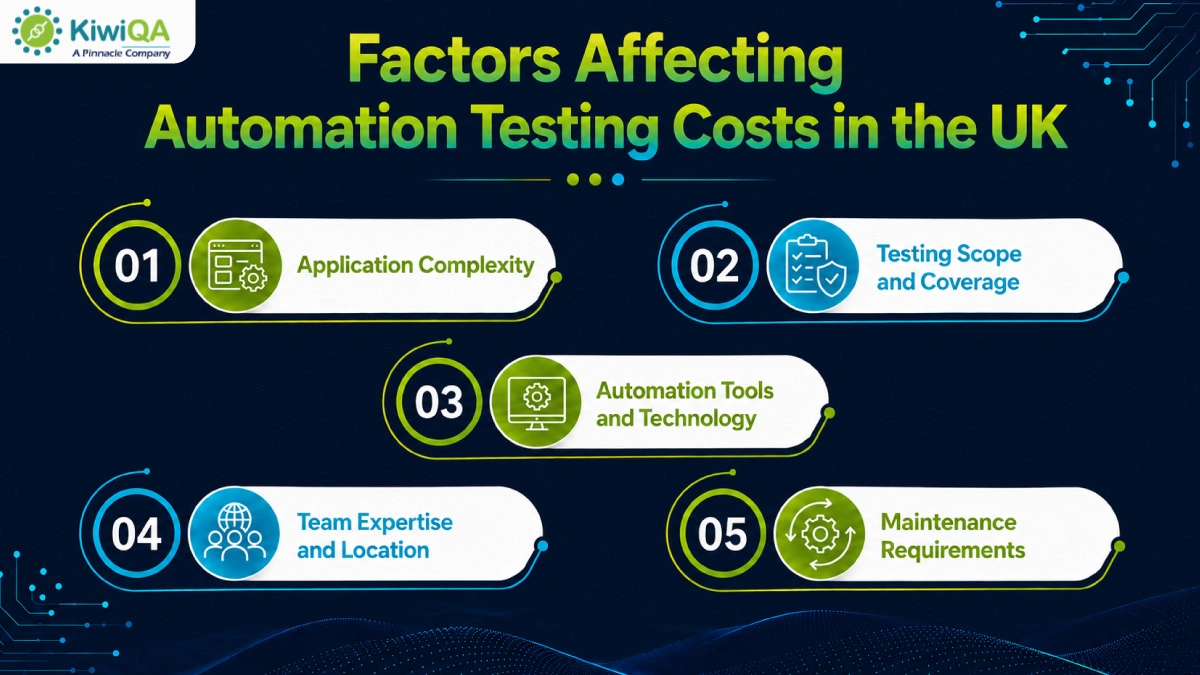
- Factors Affecting Automation Testing Costs in the UK
- ◈ Application Complexity
- ◈ Testing Scope and Coverage
- ◈ Automation Tools and Technology
- ◈ Team Expertise and Location
- ◈ Maintenance Requirements
- Hidden and Ongoing Costs of Automation Testing
- ◆ Test Maintenance
- ◆ Infrastructure and Test Environment
- ◆ Training and Support
- ◆ Tool and License Costs
- ◆ Framework Updates
- ◆ Test Management and Reporting
- How to Reduce Automation Testing Costs
- ◈ Start by automating repetitive and high-value test cases
- ◈ Select tools according to project requirements and long-term costs
- ◈ Use reusable frameworks and integrate automation with CI/CD
- ◈ Consider outsourcing when specialist expertise is required
- ◈ Prioritize test maintenance and regularly remove outdated or low-value automated tests
- Looking for the Right Automation Testing Solution?
How Much Does Automation Testing Cost in the UK in 2026?
Automation testing supports UK firms to test software quickly, improve test coverage, and identify errors earlier across frequent development and release cycles. Automation testing services allow firms to reduce repetitive manual testing while improving consistency and quality of software. The worldwide automation testing market is expected to reach USD 89.0 billion over the next 7 years.
Understanding automation testing costs before starting a project allows firms to set a realistic budget, select an ideal engagement model, and avoid unexpected expenses. The cost of automated software testing services can vary based on app complexity, QA scope, team expertise, infrastructure, and maintenance demands.
Read the details below to explore the key factors that influence automation testing costs in the UK in 2026. We have mentioned costs for small, medium, and large-sized business projects along with the hidden expenses. At the end, a few practical ways are mentioned to reduce the overall costs of automation testing services.
How Much Does Automation Testing Cost in the UK in 2026?
There isn’t a single project price for the whole UK because costs differ depending on application complexity, test coverage, tools, team size, and engagement model. In 2026, the median contract rates for automation testers in the UK are approximately £425 per day, while those for automation test engineers are approximately £459 per day. Here, check the test automation cost benefit analysis for small to large businesses.
The cost of a small automated testing services project with one application, few test cases, and limited functionality could range from £5,000 to £15,000. Automating crucial processes and regression scenarios is typically the main goal of these projects.
Depending on the necessary automation framework and team size, medium-sized applications with extensive test coverage, numerous integrations, APIs, and multiple testing environments may cost between £15,000 and £50,000.
The automation testing cost for enterprise applications with numerous platforms, extensive test suites, intricate integrations, and CI/CD automation can range from £50,000 to £150,000 or more.
Test planning, framework development, tool configuration, environment setup, test script creation, and CI/CD integration are all included in the initial costs of hiring a test automation company. Maintaining scripts, updating frameworks, repairing unsuccessful tests, increasing coverage, and accommodating evolving application requirements are examples of ongoing expenses.
The overall budget is influenced by factors like automation tester rates, test planning and script development, automation tools and licenses, test environments, cloud or device infrastructure, CI/CD integration, test execution, reporting, and continuing maintenance.

Automation Testing Pricing Models in the UK
◆ Hourly and Daily Testing Rates
For UK companies that require automation testing support for a particular time frame or project phase, hourly and daily pricing is a fair choice. The complexity of testing, the tester’s experience, and technical proficiency all have a significant impact on the final cost. Experienced automation engineers with knowledge of frameworks usually charge more than junior testers.
The location, industry, technical specifications, and length of the contract can all affect the cost of testing for UK specialists. Complex applications, multiple platforms, CI/CD integration, and advanced automation frameworks are examples of testing projects that might require highly qualified specialists and therefore have higher daily rates. Additionally, companies should think about whether they require a tester for a few hours, a few days, or a longer engagement.
When testing requirements are still changing, hourly or daily pricing is especially effective. Instead of committing to a set project price, it enables businesses to increase or decrease testing hours based on development progress. However, before beginning the engagement, businesses should specify the expected deliverables, testing duties, and reporting requirements in detail. The ideal test automation service provider guarantees that testing resources are aligned with project priorities and prevents unforeseen expenses.
◆ Fixed-Price Automation Testing Projects
Fixed-price software test automation services give companies a set price based on predetermined deliverables and a predetermined scope of work. When testing requirements are well-defined prior to the start of the project, this model may be appropriate. Application complexity, testing specifications, automation coverage, supported platforms, and integration requirements are some of the variables that typically affect the final cost.
Project costs are also significantly influenced by the quantity of test cases. A large enterprise application with hundreds or thousands of test cases will usually require more work than a small application that needs automation for a small number of crucial workflows. Companies should also think about whether they need to create new test scenarios or transform current manual test cases into automated scripts.
Automated test scripts, test execution reports, defect reports, framework development, documentation, and integration with CI/CD pipelines are examples of project deliverables. Extra requirements can raise the project’s total cost, especially if testing requires a variety of browsers, devices, and environments.
Cost predictability is fixed pricing’s primary benefit. Budgeting is made easier for businesses because they are aware of the anticipated investment before work starts. Additional Automation testing rates may be charged for significant modifications. Throughout the engagement, both parties can maintain clear expectations with the support of a comprehensive project scope.
◆ Dedicated Automation Testing Teams
The dedicated automated testing companies offer continuous testing resources for a company’s software platforms, products, or applications. Organizations with numerous applications that need ongoing quality assurance, frequent releases, or long-term testing requirements will find this model especially helpful.
The size of the team and expertise required determine the monthly cost. For a focused product, a small team of one or two automation engineers might be enough, but larger companies might need automation engineers, QA leads, manual testers, and specialized testing specialists. The total monthly investment can be raised by senior professionals with expertise in enterprise applications, DevOps integration, performance testing, and complex automation frameworks.
The technologies and responsibilities that the team will oversee should also be taken into account by businesses. A dedicated team may be responsible for designing automation frameworks and writing and maintaining test scripts. Their role is analyzing failures, reporting defects, and incorporating testing into CI/CD workflows.
Compared to short-term testing engagements, this pricing model may offer more continuity. Over time, team members’ familiarity with the application, business procedures, and testing requirements can increase productivity. Scaling testing capacity as development needs increase may also be made simpler. A dedicated team can support continuous testing and long-term quality goals while offering predictable monthly costs for companies with continuous release cycles and heavy testing workloads.
◆ Pay-as-You-Go Testing Services
Businesses can access automation testing resources in a flexible manner without committing to a fixed testing team or long-term contract by using pay-as-you-go testing services. Businesses typically pay under this model based on the amount of testing they use, the number of hours they work, the tasks they complete, or the particular services they need.
For businesses with irregular testing needs, this strategy may be effective. For example, a company might require extra automation assistance prior to a significant product launch, during a software update, or when adding new features. The company can obtain testing expertise when required rather than keeping a dedicated testing team.
The type and amount of testing needed determine the cost. While complex applications and extensive test coverage will require more testing effort, a small number of automated test cases may require fewer resources. The total cost may also be impacted by the technical expertise required.
This model’s adaptability makes it appropriate for organizations with varying testing workloads, startups, and small businesses. Businesses can avoid paying for unnecessary resources by scaling testing support up or down in accordance with project requirements. However, before work starts, companies should set clear expectations regarding the scope of testing, turnaround times, deliverables, and reporting. This keeps flexible pricing economical. Pay-as-you-go is the ideal option for businesses that only occasionally require automation testing.
Also Read: Key Benefits of Automation Testing for Banking Applications
In-House vs Outsourced Automation Testing
It takes more than just paying employees to create an internal automation testing team. Recruitment, benefits, training, software, testing infrastructure, devices, tools, and continuous professional development are all factors that businesses must consider. Maintaining qualified automation specialists can raise long-term operating costs, especially when testing workloads fluctuate. However, an internal team offers more control and direct communication.
Businesses can access skilled testing specialists without creating an entire internal team by collaborating with test automation service providers. Pay-as-you-go contracts, fixed-price projects, hourly or daily rates, and dedicated teams are some of the ways discussed above that outsourcing can be set up. This strategy can lower hiring and infrastructure costs while offering access to specialized knowledge and adaptable resources. But before choosing a provider, companies should consider communication, security, time zones, and service quality.
In-house testing provides a deeper understanding of internal systems, more control, and closer collaboration with development teams. However, it may result in increased expenses for infrastructure, training, pay, and hiring. Specialized knowledge, scalable resources, and possibly reduced operating expenses can all be obtained through outsourcing. Dependency on an outside provider, communication difficulties, and less direct control are possible trade-offs. Long-term business needs, budget, testing volume, and project complexity all influence the right approach.
Factors Affecting Automation Testing Costs in the UK
◈ Application Complexity
One of the main variables affecting automation testing expenses in the UK is application complexity. More test scenarios and automation work are usually necessary for larger applications with lots of features, user journeys, and business rules. Applications with intricate workflows might also require more time for script development, validation, and test planning. Testing requirements may be further increased by databases, legacy systems, payment gateways, third-party integrations, and APIs.
Due to outdated technologies, poor documentation, or compatibility issues, legacy applications may need more work. Therefore, before estimating automation costs, businesses should evaluate the application’s size as well as its technical environment. Testing teams can determine the necessary tools, automation coverage, resources, and overall project effort. It can be done with the help of a clear understanding of application architecture.
◈ Testing Scope and Coverage
The amount of automation work required and, thus, the total project cost are directly impacted by testing scope. It takes less work to automate a few crucial workflows than to develop thorough coverage for an entire application. The workload may be influenced by the quantity of test cases, business procedures, user roles, and supported platforms. Businesses that need multiple testing types might experience higher costs.
Tools, frameworks, abilities, and environments may vary depending on the testing area. Before starting automation, organizations should prioritize important workflows and establish reasonable coverage goals. Teams can concentrate resources on high-value scenarios and avoid unnecessary automation. It can raise costs without providing equal benefits by using a well-planned testing scope.
◈ Automation Tools and Technology
Both the initial and continuing costs of testing can be impacted by the technologies and tools chosen for automation. Although companies may still require qualified experts to configure, integrate, and maintain open-source frameworks like Selenium, Cypress, and Playwright, they can lower licensing costs. Additional features may be available on commercial testing platforms, but there may be subscription or licensing costs.
The budget may also be impacted by infrastructure needs. Additional expenses may be caused by mobile devices, cloud-based testing environments, cross-browser testing, test data management, and CI/CD pipeline integration. Instead of making decisions based only on cost, businesses should assess tools according to the requirements of their applications. While controlling infrastructure and maintenance costs, automation efficiency can be increased by choosing an appropriate technology stack.
◈ Team Expertise and Location
Project costs can be greatly impacted by the automation testing team’s location and level of experience. Compared to less experienced testers, senior automation professionals with proficiency in test frameworks, programming languages, API testing, CI/CD, and complex enterprise applications typically command higher rates. On the other hand, experienced specialists can frequently deliver automation frameworks more effectively and minimize expensive maintenance problems.
Pricing is also influenced by location. Compared to remote or outsourced teams working from less expensive regions, UK-based testing teams might have higher rates. When choosing a delivery model, businesses should take into account technical proficiency, communication, time-zone compatibility, security requirements, and project complexity. Organizations can reduce costs without sacrificing project timeliness or testing quality by achieving the correct balance between location and expertise.
◈ Maintenance Requirements
The creation of automated test scripts is not the end of the costs associated with automation testing. When companies add new features, customize workflows, update interfaces, or incorporate new technologies, applications often change. Automated scripts may fail as a result of these modifications, necessitating frequent updates and debugging. Businesses can create efficient maintenance procedures and maintain the reliability of automation suites as applications change by working with a test automation consultancy.
Updating test scripts, resolving compatibility issues, managing test data, fixing failed tests, and upgrading frameworks are all examples of maintenance. Additionally, testing infrastructure, cloud environments, browsers, devices, and CI/CD integrations may require continuous maintenance for businesses. A more accurate picture of the overall automation testing prices is achieved by predicting these repetitive tasks from the outset.
Hidden and Ongoing Costs of Automation Testing
◆ Test Maintenance
As applications, user interfaces, workflows, and business requirements change, automated tests need to be maintained on a regular basis. When test environments or features are changed, scripts might need to be updated. Test suites can become unreliable, generate false failures, and lower confidence in automation results without regular maintenance, which raises the cost of testing over time.
◆ Infrastructure and Test Environment
Dedicated infrastructure, such as test servers, cloud environments, databases, browsers, mobile devices, and test data, may be needed for automation testing. Maintaining various environments and supporting various OS or device configurations can also be expensive for businesses. Expenses may rise as a result of these infrastructure requirements, especially for large applications that need extensive cross-platform testing.
◆ Training and Support
Professionals with expertise in programming, testing techniques, frameworks, and development methods are needed for automation frameworks. To handle automation tasks, businesses might need to spend money on hiring experts or training current testers. Maintaining testing efficiency and resolving framework problems may also be required for ongoing technical support.
◆ Tool and License Costs
Businesses may still need commercial tools for specialized testing even though many automation frameworks are open source. Monthly, yearly, or usage-based license fees are all possible. Additional expenses for integrations, premium features, user accounts, and increasing tool usage across several projects should also be taken into account by organizations.
◆ Framework Updates
Regular updates are provided to operating systems, development technologies, browsers, automation frameworks, and libraries. These modifications may have an impact on current test scripts and necessitate framework modifications or compatibility testing. To assess updates, fix compatibility problems, update dependencies, and guarantee that automated tests continue to function reliably across supported environments, businesses might require technical resources.
◆ Test Management and Reporting
It takes more than just running test scripts to achieve effective automation. To track outcomes, businesses may require test management platforms, dashboards, reporting tools, defect tracking systems, and analytics capabilities. The following systems are expensive to maintain. In order to share test results, regular reporting and analysis also require expert assistance.
Also Read: How SaaS Companies Scale Faster with Automation-First Testing
How to Reduce Automation Testing Costs
◈ Start by automating repetitive and high-value test cases
First, automate time-consuming, repetitive, and business-critical test cases. Setting frequently performed scenarios as a top priority can reduce unnecessary automation work and provide quicker returns.
◈ Select tools according to project requirements and long-term costs
Choose automation tools based on your application, testing requirements, technical environment, and financial limitations. Before choosing, take into account the costs of long-term maintenance, infrastructure, integration, and licensing.
◈ Use reusable frameworks and integrate automation with CI/CD
To cut down on redundant development work, use reusable and modular automation components. Automated test integration with CI/CD pipelines can speed up testing and find errors sooner.
◈ Consider outsourcing when specialist expertise is required
For short-term or specialized projects in particular, outsourcing automation testing can give access to knowledgeable experts without the expense of creating and managing a large internal team.
◈ Prioritize test maintenance and regularly remove outdated or low-value automated tests
Review automated test suites on a regular basis, verify unreliable scripts, and eliminate low-value tests. Execution time, false failures, and unnecessary maintenance effort are all decreased by keeping a targeted test suite.

Looking for the Right Automation Testing Solution?
Automation testing costs in the UK can vary significantly depending on factors such as application complexity, testing scope, team expertise, automation tools, infrastructure, and ongoing maintenance requirements. Working with an experienced test automation company can help businesses select the right automation strategy, optimize resources, and manage long-term testing costs effectively.
Instead of focusing only on the lowest initial investment, businesses should consider the overall ROI, reduced manual testing effort, faster release cycles, improved test coverage, and long-term QA efficiency. Choosing the right test automation consultancy can help organizations build a scalable and sustainable testing process while maintaining software quality and supporting faster, more reliable releases.









Comments are closed.